Short answer: gloss is the easiest to live with, satin is the best-looking compromise, and matte is the one that asks the most of you. The finish you pick changes your weekends more than it changes your quote.
Colour is the decision everyone agonises over. Finish is the decision that actually determines whether you still love the car in year three. A swatch book will show you all three in a showroom under even light, which is the one condition a car never sees.
Here is how each one behaves in the real world.
What the three finishes actually are
All three are the same base product: an automotive-grade cast vinyl with a colour layer and a protective top layer. What differs is the surface of that top layer.
- Gloss has a smooth top layer that reflects light in a single direction. That is why it mirrors the sky and why it reads closest to factory paint.
- Satin has a lightly diffused surface. Light scatters slightly, so you get a soft sheen and a visible highlight along a body line, but no hard reflection.
- Matte has a heavily diffused surface. Light scatters in every direction, the surface reads as flat, and the body lines of the car are defined by shadow rather than by reflection.
That last point is the one people miss. Matte does not just remove shine, it removes the reflections that normally describe a car's shape. On a heavily sculpted body this looks extraordinary. On a soft, rounded body it can flatten the car into a silhouette.
How each finish reads on different bodies
A flat, angular body has enough hard edges that it stays legible without reflections, which is why matte and tactical finishes have become the signature look on angular trucks. If that is your car, the Cybertruck wrap page has the finishes that consistently work on flat stainless panels.
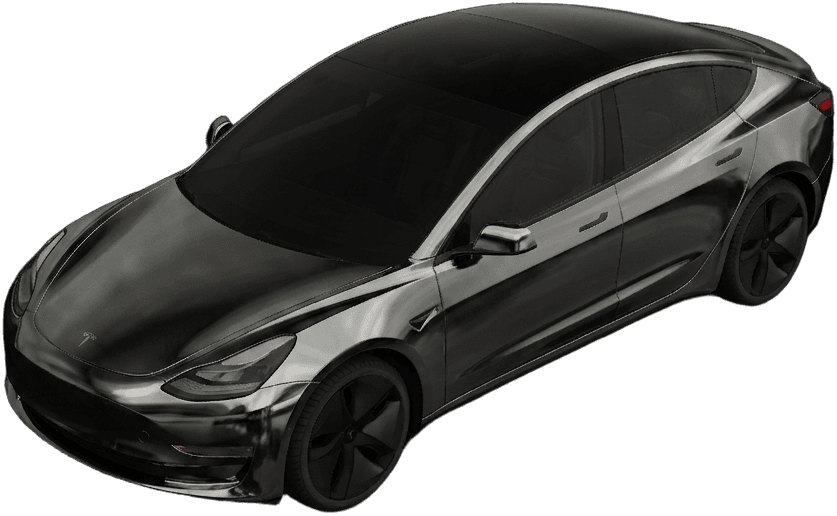
Sculpted sedans are the opposite case. The shoulder line and the curve over the rear arch are doing the visual work, and they need light to describe them. Satin is the sweet spot here: enough sheen to keep the shape readable, enough diffusion to look deliberately non-standard. Preview it on your own car on the Model 3 wrap page rather than judging from someone else's photos, because a photo of a matte car is taken in chosen light and your driveway is not.
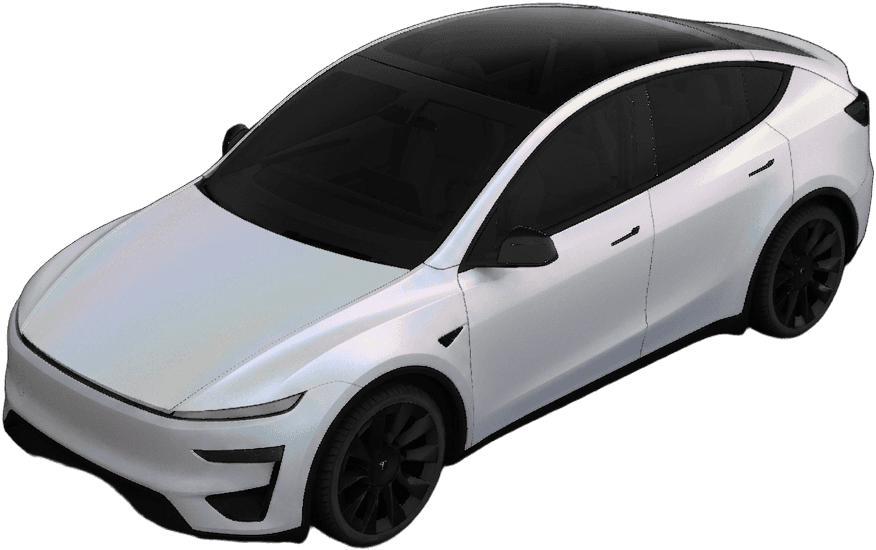
Tall crossovers and SUVs have big, slab-sided panels that show every imperfection in both the film and the surface underneath. Gloss and satin hide a mediocre install better than matte does. If you are wrapping a larger body, the Model Y wrap page lets you compare the same colour in different finishes before you book anything.
The ownership cost nobody quotes
This is the part that decides whether you were right.
| Gloss | Satin | Matte | |
|---|---|---|---|
| Automatic brush wash | Never advisable | Never advisable | Never advisable |
| Normal car shampoo | Yes | Yes | Matte-safe only |
| Can you polish out a blemish | Usually | Sometimes | No |
| Shows water spots | Yes | Mildly | Mildly |
| Shows fingerprints and skin oils | Barely | Barely | Noticeably |
| Hides swirls and light marks | Poorly | Well | Well |
| Sealant options | Wide | Wide | Matte-specific only |
The row that catches people out is fingerprints. Matte's diffused surface holds the oils from your hands, so the area around the door handle, the trunk edge and the charge port darkens over time. It cleans off, but it comes back, and it is a weekly thing rather than a yearly thing.
The row that catches out the other half is polishing. On gloss, a light scuff can often be improved. On matte, any abrasive permanently changes the surface texture in that spot, and a shiny patch on a flat car is far more obvious than a scuff. The correct matte repair is usually replacing the panel's film, not correcting it.
Whichever you pick, the wash routine is what determines how it ages — the details are in our guide on how to wash a wrapped car.
What each finish costs
Standard gloss colour-change film is the cheapest tier. Matte and satin sit slightly above it. Chrome, colour-shift and textured films sit well above all three, and the gap there is large rather than marginal.
Labour is broadly the same across gloss, satin and matte — the installer is doing the same job with the same panels. What moves your quote is the film, and to a lesser extent how forgiving the finish is of a rushed job, because a shop that knows matte punishes imperfection may quote more hours for it. Our wrap cost guide lists the ranges we see by body size.
How to actually decide
Three questions, in this order.
Where does the car sleep? Garaged, or outdoors? Sun is the main ageing mechanism for all vinyl, and a car parked outside in strong sun is the worst case for every finish. It is not a reason to avoid matte specifically, but it is a reason to be honest about how much maintenance you will realistically do. Our guide on how long a car wrap lasts covers what actually drives lifespan.
How do you wash it? If the honest answer involves a drive-through wash, choose gloss and move on. Satin and matte will not survive that routine looking good, and no amount of wanting them to will change it.
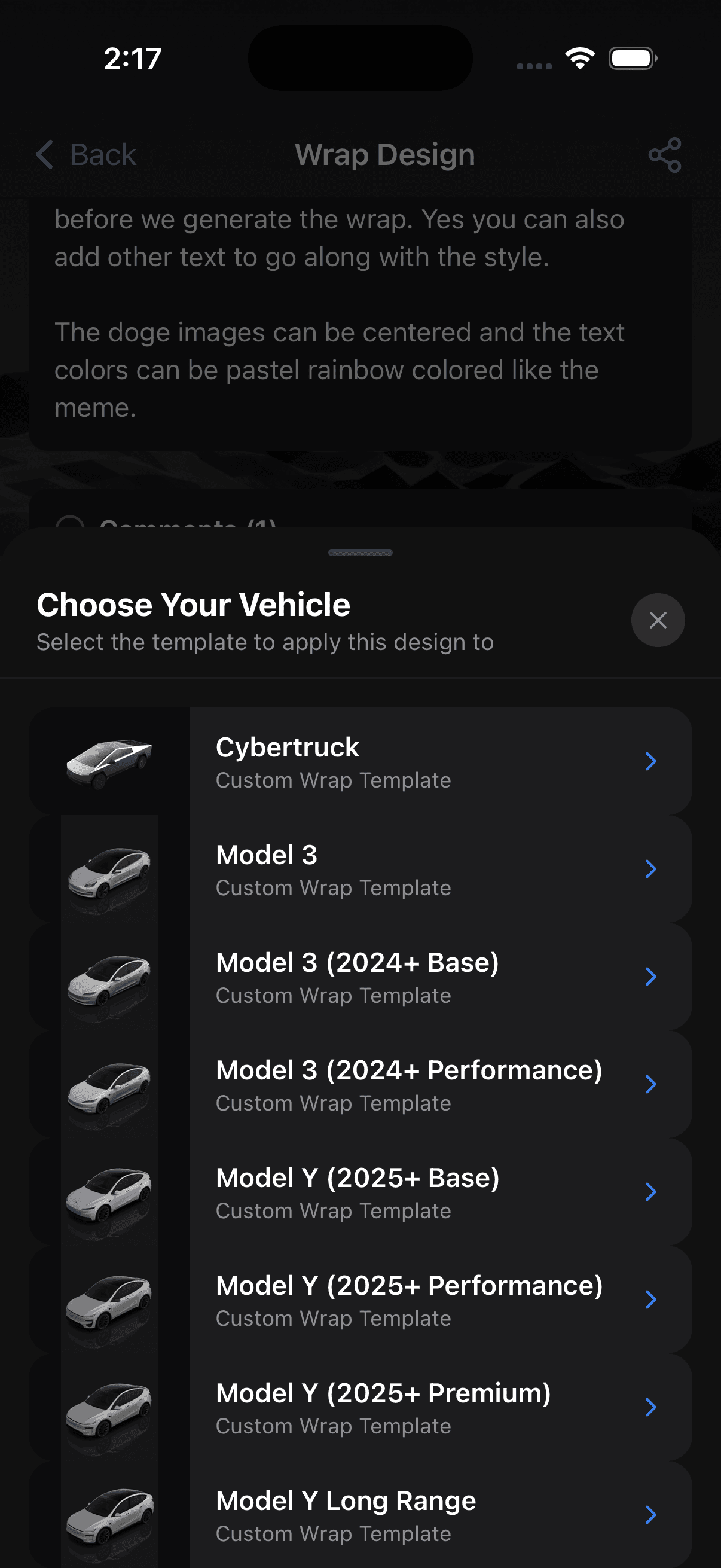
Have you seen it on your own car, in your own light? Not on a swatch, not on someone else's car at a meet. This is the cheap part of the decision, and the one most people skip. Generate the same colour in all three finishes on your exact model in the design studio, look at the renders outside on your phone, and see which one still holds up.
The combination worth considering
You do not have to pick one. A satin body with a gloss-black roof, mirrors and trim is one of the best-looking and most forgiving combinations there is. The gloss elements read as a factory blackout package, the satin body hides the light marks that daily driving puts into a car, and the contrast between the two finishes does the work that a single dramatic colour would otherwise have to do.
If you like that idea but not the price of a full wrap, the same logic applies at a fraction of the cost. A chrome delete and a gloss roof on an otherwise standard car gets you a surprising amount of the effect.
Tell your installer about a mixed-finish plan at quoting time, not on the day. They need to order two films in the right quantities in one go, and a shop that finds out mid-install is a shop that improvises.
Try it before you commit
Finish is easy to describe and hard to imagine. It takes about thirty seconds to generate the same colour in gloss, satin and matte on a template of your exact model and see the difference for yourself — which is a better use of a few dollars than discovering it after the film is on the car.
Design your wrap in the studio, or get the iOS app and do it from the driveway while you are looking at the actual car.